Macedonian cuisine
- Sharplaninski dvojnik (Шарпланински двојник) (Донка Цапова - Mississauga, ON)
- Ladna salata od grav (Ладна салата од грав) (Донка Цапова - Mississauga, ON)
- Predjadenje od kompiri (Предјадење од компири) (Донка Цапова - Mississauga, ON)
- Gjevrechinja (Ѓевречиња) (Кире Банишки - Toronto, ON)
- Savoury pâté roll (Солен ролат со паштета) (Гордана Мишковска-Колева - Brampton, ON)
- Lasagne with minced meat (Лазања (со мелено месо)) (Дијана Веселиновска - Etobicoke, ON)
- Lasagne with sausages and eggs (Лазања (со колбаси и јајца)) (Дијана Веселиновска - Etobicoke, ON)
- Piroshki (Пирошки) (Дијана Веселиновска - Etobicoke, ON)
- Vasina torta (Васина торта) (Марија Банишка - Toronto, ON)
- Susamchinja (Сусамчиња) (Горица Јовчевска - Markham, ON)
- Skopska ravanija (Скопска раванија) (Горица Јовчевска - Markham, ON)
- Sandwich cake (Сендвич торта) (Горица Јовчевска - Markham, ON)
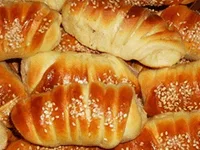
- Kiflichki so sirenje (Кифлички со сирење) (Дијана Веселиновска - Etobicoke, ON)
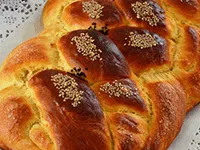
- Kozinjak (Козињак) (Дијана Веселиновска - Etobicoke, ON)
- Roast veal (Печено телешко месо) (Гордана Мишковска-Колева - Brampton, ON)
- Shketo so jagneshko (Шкето со јагнешко) (Марија Дика - Toronto, ON)
- Salama od orasi (Салама од ораси) (Гордана Мишковска-Колева - Brampton, ON)
- Aravanija (Араванија) (Гордана Мишковска-Колева - Brampton, ON)
- Sarma (Сарма) (Весна Огњанова - Ajax, ON)
- Veal pâté (Телешка паштета) (Каролина Петковска - Brampton, ON)
- Baklava (Баклава) (Дијана Веселиновска - Etobicoke, ON)
- Gibanica (Гибаница) (Дијана Веселиновска - Etobicoke, ON)
- Burek with meat (Бурек со месо) (Мими - Toronto, ON)
- Stuffed eggplant (Полнети модри патлиџани) (Мими - Toronto, ON)
- Time for sutlijash (Време за сутлијаш) (Tugjino Jabano)
- Anyone fasting? Help yourself to some Ribji gjuvech! (Некој пости? Повелете на Рибји ѓувеч!) (Tugjino Jabano)
- Pernichinja od juneshki shnicli (Перничиња од јунешки шницли) (Tugjino Jabano)
- Chicken casserole (Тава со пилешко месо) (Tugjino Jabano)
- Vegetarian moussaka (Вегетаријанска мусака) (Tugjino Jabano)
- Pita or pizza? (Пита или пица?) (Tugjino Jabano)
- Friday is... Tavche gravche day! (Петок е... ден за Тавче гравче!) (Tugjino Jabano)
- Boss, a ten with onions! (Мајсторе, десетка со кромид!) (Tugjino Jabano)
Sharplaninski dvojnik (Шарпланински двојник) — stuffed pork and bacon-wrapped meatball
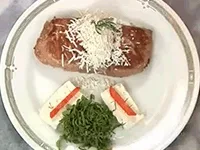
Ingredients:
- 120 g pork
- 80 g minced meat
- 1 slice of bacon
- 50 g kashkaval cheese
- 50 g ham
- a little grated cheese
- 1 pickle
- seasonings to taste
Method:
Pound the pork flat and layer the kashkaval, ham and pickle on top, all thinly sliced beforehand. Once the meat is filled, close it up well and cook it on the grill. Then shape the minced meat and seasonings into an egg-shaped meatball and wrap it in the slice of bacon. Grill it all, then grate a little cheese over the dvojnik. Enjoy, and bon appétit!
Ladna salata od grav (Ладна салата од грав) — cold bean salad
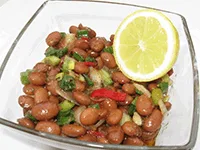
Ingredients:
- 500 g beans
- 4 onions
- salt
- bay leaf
- a few green onions
- a few cloves of garlic
- oil
- vinegar
- a sprig of mint
Method:
Cook the beans, but make sure they stay whole. Then drain off the water and mix the beans with the sliced onions (both the regular and the green ones), adding the finely chopped garlic, a little paprika, oil and vinegar. Chill well, and serve garnished with mint leaves. Enjoy!
Predjadenje od kompiri (Предјадење од компири) — baked potatoes with egg

Ingredients:
- 4 large potatoes
- salt
- butter
- black pepper
- 4 hard-boiled eggs
Method:
Cut the potatoes in half horizontally, hollow them out, arrange them in a greased baking pan and bake them in a preheated oven. Take them out of the oven, put some butter in the hollows and salt them. Put half a boiled egg in each, salt it, add black pepper and a little butter, and put them back in the oven. You can also grate some kashkaval over the egg, which gives it a sharper flavour. Serve with sour cream, and dig in.
Gjevrechinja (Ѓевречиња) — sesame bread rings
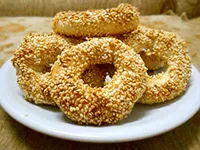
Ingredients:
- 1 kg flour
- 1 packet of yeast, proofed
- 1 teaspoon salt
- 1 teaspoon sugar
- sesame seeds
Method:
Knead the flour, yeast, salt and sugar with water into a medium-soft dough, then divide it into 12 equal pieces. Shape each piece into a little ring.
Bring a litre of water to the boil with three tablespoons of honey. Drop the rings into the boiling water. As soon as they float to the top, lift them out with a slotted spoon, roll them in plenty of sesame seeds, lay them in a greased baking pan and bake them in a hot oven until golden.
We recommend eating them straight away, with sheep's cheese or apricot jam.
Enjoy!
Savoury pâté roll (Солен ролат со паштета)
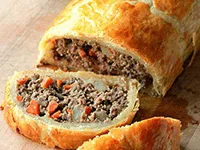
Here's a recipe that's so quick and easy to make that even the men can manage it. It's also very tasty and looks interesting. I hope you like it.
Ingredients:
- 1 long French loaf
- 2 eggs
- 1 large tin of pâté (100 g)
- 2-3 pickles
- 2-3 small carrots
Method:
First cut the ends off the loaf. Set the ends aside, as you won't be using them. Then cut the loaf into 3 equal pieces and hollow them out with a knife, taking out the soft middle so the 3 pieces are left as little more than crust.
Hard-boil the eggs. Blanch the carrots just until they soften. Once everything is cooked, finely chop the eggs, carrots and pickles.
Crumble the soft middle of the bread into a bowl and add the pâté, carrots, eggs and pickles. Mix everything together well. Then spoon the mixture into the bread crusts.
Wrap it in plastic wrap and put it in the fridge.
Before serving, cut it into slices; they'll look like little rounds.
Bon appétit.
Lasagne with minced meat (Лазања (со мелено месо))
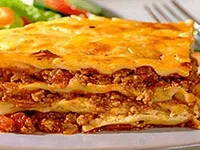
Ingredients:
- 500 g lasagne sheets
- 500 g minced meat
- 400 g kashkaval cheese
- 800 ml ketchup
- 150 g spaghetti sauce
- 2 tablespoons oil
- 2 cloves of garlic
- 1 small teaspoon salt
- 1 small teaspoon sugar
- 1 teaspoon oregano
- a little pepper
Method:
First make the meat sauce with all the ingredients, as follows:
Heat the oil in a deep pot, brown the minced meat and add all the listed ingredients, stirring well so nothing sticks. The sauce should be thick: when you draw a spoon across the bottom of the pot it should leave a trail, and that's the sign the sauce is ready.
Meanwhile, boil the lasagne sheets (in water with a little oil and salt) for about 10-15 minutes until soft, then cool them in cold water.
In a 22x33 cm pan, layer first the lasagne sheets, then a layer of sauce, then grated kashkaval, then lasagne again, sauce, kashkaval, and so on until the sauce and lasagne sheets are used up. The last layer of lasagne must also be topped with sauce and kashkaval.
Finally, cover with foil and bake for 30 minutes at 180C (or 350F).
Lasagne with sausages and eggs (Лазања (со колбаси и јајца))
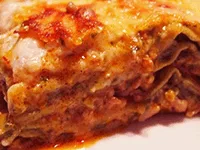
Ingredients:
- 400 g lasagne sheets
- 3 sausages
- 6 eggs, boiled (chopped)
- 500 g white cheese
- 170 g kashkaval cheese slices
- 50 ml powdered cheese (Kraft)
- 250 g sliced mushrooms
- 800 ml ketchup
- 2 tablespoons margarine
- 2 cloves of garlic
- a little pepper
Method:
Peel the casings off the sausages, chop them and fry them, then add the ketchup, garlic and pepper.
Once all of that has fried, leave it uncovered for 15 min.
Fry the mushrooms in the margarine, adding the fried meat as they cook, and once everything is nicely browned, set it aside.
Meanwhile, boil the lasagne sheets (in water with a little oil and salt) for about 10-15 minutes until soft, then cool them in cold water.
In a 22x33 cm pan, layer 1/3 of the lasagne sheets, 1/3 of the sauce, then the 500 g of white cheese. Then another 1/3 of the lasagne, 1/3 of the sauce, then the eggs with the 170 g of kashkaval slices, and finally the last third of the lasagne and the rest of the sauce. Sprinkle the powdered cheese over the top, cover with foil and bake at 180C or 350F for just 30 minutes.
Piroshki (Пирошки)

Ingredients:
- 50 g yeast
- 1 tablespoon flour
- 2 egg yolks
- 50 g margarine
- 1 teaspoon salt
- half a litre of milk
- a little salt
- a little sugar
For the filling:
- 500 g grated kashkaval cheese
- 500 g salami (mortadella), cut into small cubes
- 500 g ketchup or spaghetti sauce
(If you like, you can add other things too, such as mushrooms, cheese, olives, etc.)
Method:
Dissolve the yeast in 3 tablespoons of warm milk with a little salt and a little sugar.
Beat the two egg yolks with 1 teaspoon of sugar, add the risen yeast and the softened margarine, then add the lukewarm milk and the flour.
Stir the dough with a spoon until bubbles appear, then work it with your hands and leave it somewhere warm to rise.
When it's ready, turn the dough out onto a floured table, knead it again and roll it out with a rolling pin (or a long, thin one) to half a centimetre thick.
Cut the dough into rounds with a glass or a piroshki cutter, and fill them.
Use 1 tablespoon of filling for each, without overfilling (if you cut them with a glass, fold the dough over into a half-moon and press the edges together with a fork).
Then fry them in hot oil (you'll need as much oil as for frying potatoes).
Fry them on both sides until golden, lift them out, let the oil drain off and serve them warm or cold, as you prefer.
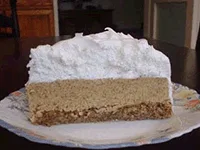
Vasina torta (Васина торта) — walnut and orange cake
Ingredients:
- 9 eggs
- 13 tablespoons sugar
- 1 tablespoon flour
- 6 heaping tablespoons ground almonds (or walnuts)
- 125 ml milk
- 200 g ground walnuts
- 1 orange
- 100 g dark chocolate
- 250 g butter
- 250 g sugar
Method:
Whisk 5 egg whites, adding 5 heaping tablespoons of sugar. Then add 5 egg yolks, one at a time. Keep beating, and at the end add 1 tablespoon of flour and 6 heaping tablespoons of ground almonds or walnuts. Bake the batter on greased paper in a No. 28 pan.
Put 125 ml of milk with 4 tablespoons (of sugar) on the heat and bring it to the boil. Then add 200 g of ground walnuts. Stir well, take it off the heat and leave it to cool. Separately, beat 4 egg yolks with 4 tablespoons of sugar. Add the beaten yolks to the cooled walnuts, along with the grated zest and juice of one orange and 100 g of melted dark chocolate. Separately, beat 250 grams of butter and, when it's ready, mix it into the walnuts and eggs. Spread this mixture over the cake.
Beat the egg whites into stiff peaks and add a thick syrup, freshly boiled, made from 250 grams of sugar and 2 cups of water. Cover the cake with this meringue on all sides, so that it turns completely white. Decorate the top with a piping bag.
Once the cake is finished, it needs to sit in the fridge for a few hours.
And it's important to make sure the guests get small slices, so there's more left for the hosts.
Susamchinja (Сусамчиња) — sesame and Turkish delight rolls
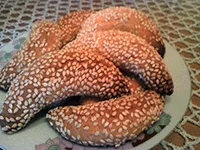
Here's a recipe you can whip up quickly, because over here we're all far too busy and have no time to waste on anything more complicated.
Ingredients:
- 1/2 kg sesame seeds
- 1/2 kg Turkish delight
- jelly candies
Method:
Toast 1/2 kg of sesame seeds in a dry pan, then add 1/2 kg of Turkish delight and keep stirring until it cools.
Once it has cooled, flatten it out into a sheet, lay finely chopped jelly candies along the end of the sheet, roll it up like a roulade and cut it into pieces.
Skopska ravanija (Скопска раванија) — Skopje semolina syrup cake
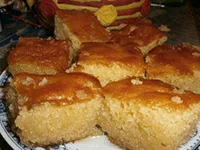
Ingredients:
- 6 eggs
- 1 cup sugar
- 3 cups semolina
- 1 packet baking powder
- 1 lemon (grated zest only)
- 1 tablespoon lemon juice
- 1 cup (a Canadian coffee mug) finely chopped walnuts
Method:
Mix all these ingredients together and bake the mixture. Pour over it a syrup made from 5 cups of water and 4 cups of sugar (but don't boil it down as much as you would for baklava). The syrup should be piping hot, and the ravanija lukewarm.
Sandwich cake (Сендвич торта)
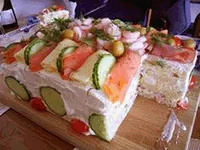
I hope our Macedonian homemakers will like this recipe. They can serve it to their guests as an appetizer, and it's very quick to make.
Ingredients:
- 2 kg mayonnaise
- 2 kg sandwich bread (one white loaf and one brown)
- 2 packages 'Philadelphia' cream cheese
- 1 can of peas
- 1 can of pork ham
- 1 can of tuna
- margarine
Method:
Cut the crust off each slice of brown bread with a knife (leaving only the middle) and spread each slice with margarine. On a serving platter, first lay lettuce leaves on the bottom for decoration, then cover them with a layer of the buttered slices of bread, followed by a layer of ham, peas, tuna and cream cheese, mixed together beforehand. Then add a second layer, and finally frost the whole sandwich cake with mayonnaise and decorate it to your taste with rounds of boiled egg, pickles, olives, tomatoes... Use your imagination and decorate this cake however you like.
Serve it as an appetizer. You won't need any other nibbles for your guests, because it's very filling. And there's lots of good stuff inside.
Kiflichki so sirenje (Кифлички со сирење) — cheese-filled crescent rolls
Ingredients:
- 1 kg flour
- 1 block of margarine (250 g)
- half a litre of milk
- 2 cubes of fresh yeast (preferably, but dry yeast will do)
- 3 eggs
- 3 small coffee cups of oil
- 3 teaspoons sugar
- 2 teaspoons salt
- caraway and sesame seeds (optional)
Method:
Crumble both cubes of yeast into a pot, add 3 teaspoons of sugar, 2 teaspoons of salt and a little of the lukewarm milk from the half litre, and let it dissolve. Then add 8 tablespoons of flour and the rest of the lukewarm milk.
Leave it to rise, covered with a lid and a cloth or a blanket.
Once the dough has puffed up, add three beaten eggs, the 3 small coffee cups of oil and enough flour to knead a soft dough... Then leave it to rise again, and once it has puffed up, knock it back and divide it into 2 equal parts. Divide each part into 6 equal pieces, which gives you 12 balls of dough, and leave them covered to rise again until the dough has dried a little.
Then roll each ball out into a round sheet about the size of a plate and cut it into 12 equal pieces: first cut it crosswise (which gives you 4 parts), then cut each part into 3 equal pieces.
Put some crumbled white cheese mixed with egg on each piece and roll it up like a crescent, from the wide end towards the point. The point must end up lying against the pan (not on top), so the crescents don't come undone.
Arrange the crescents in the pan, brush them with two beaten egg yolks and, if you like, sprinkle sesame or caraway seeds on top.
Once the crescents are arranged in the pan, take the margarine and a small knife, cut off little pieces of margarine and put one on each crescent. If you have 2 pans of crescents, divide the margarine in two (so there's enough for all of them). Put them in an oven preheated to 200C and bake until the crescents are nicely golden.
Once they've cooled you can eat them, or put them in the freezer (well sealed in a plastic bag or a plastic container).
Kozinjak (Козињак) — braided sweet bread
Ingredients:
- 500 ml milk
- 6 eggs
- 1 tablespoon lard
- 1 scant cup oil
- 1 cup sugar
- 1 packet vanilla sugar
- 250 g raisins (soaked in a little milk)
- 2 tablespoons rum
- 1 cube of fresh yeast (if you can't get fresh, dry will do instead)
- Grated zest of 1 lemon
- Half a packet of baking powder
- Half a teaspoon of salt
Method:
Make a starter dough from the milk (lukewarm), 1 teaspoon of sugar, the yeast, half a teaspoon of salt and 3 tablespoons of flour, and leave it all to rise.
Once it has risen (puffed up), add the 6 eggs (beaten beforehand), 1 tablespoon of lard, the sugar, the oil, the raisins (soaked in milk beforehand to soften them), the lemon zest, the rum, the baking powder and the vanilla sugar, then knead in flour (for a soft dough). You'll end up with a soft mixture that isn't too sticky, but isn't stiff either. Leave the dough to rise (puff up) again, then knock it back once more and leave it to rise one more time.
Now knead the dough and divide it into two equal parts, then divide each of the two into three equal parts, so you'll have 6 pieces of dough in all. Roll each piece into a rope, then braid three ropes into a plait, and do the same with the other three ropes.
Put both braids on aluminum foil in a greased baking pan (well apart from each other) and leave them to rise again, then brush them with egg yolk and bake them in an oven preheated to 250C.
As soon as the loaves go into the oven, turn the temperature down to 150C and bake for 45 minutes. Then leave the kozinjak to cool, and eat it with milk, or however you like. Kozinjak can also be frozen, well sealed in a plastic bag.
Roast veal (Печено телешко месо)
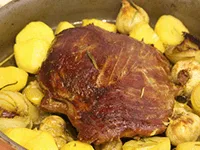
Ingredients:
- 1.5 kg veal
- 700 g potatoes
- 4 small onions
- 2 tomatoes
- 1/4 cup butter
- 5 tablespoons red wine
- 5 tablespoons oil
- 4 celery stalks
- a little dried rosemary
- a little parsley
- 1 teaspoon paprika
- 1 teaspoon salt
- a little black pepper
Method:
Rub the meat all over with salt, paprika, black pepper and oil. Then put the meat and the rosemary in a roasting pan or an earthenware dish. Cut the potatoes into pieces (peeled and washed first), finely chop the celery, and add them to the meat. Next add the tomatoes (peeled and cut into pieces) and the parsley. Finally, add the butter and the wine and put it in the oven to roast at 350 degrees for about 2 and a half hours.
Bon appétit.
Shketo so jagneshko (Шкето со јагнешко) — lamb and green onion stew
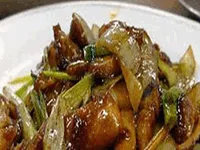
I love your section of Macedonian recipes, so here I am with a good, tasty Macedonian speciality of my own to suggest.
Ingredients:
- 500 g lamb, cut into pieces (from Ontario, if possible)
- 1 onion
- 2 carrots
- 2-3 green onions
- 2-3 bunches of Italian parsley (because it's more aromatic)
- 1 tablespoon flour
- Vegeta
- pepper
- salt
Method:
Brown the lamb on all sides in 2-3 tablespoons of hot oil. Add the finely chopped onion and the carrots and sauté for about 10 minutes, taking care that nothing burns. The onion should caramelize. Add the white part of the green onions, finely chopped, and sauté for about 5 minutes, then add the green part of the onions too. Fry everything together for about 5 minutes.
Wash the parsley, chop it finely as you would for a salad and add it to the meat and onions. Pour in a little water, just enough to cover the meat. Bring it to the boil, then simmer on low heat until the meat is cooked (about 30 minutes).
Put the flour, Vegeta, salt and pepper in a small glass of water, stir with a spoon and add it to the pot with the meat. Let it all boil together until the juices thicken, about 5 minutes.
Serve hot.
Variation: you can also add a little spinach along with the parsley.
Bon appétit.
Salama od orasi (Салама од ораси) — walnut and chocolate log
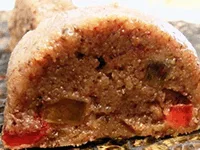
Ingredients:
- 3 coffee mugs of ground walnuts
- 3 bars of baking chocolate, grated
- 1 egg
- a little ground cloves
- cinnamon
- 1 cup icing sugar
- icing sugar for dusting
Method:
In a bowl, mix the ground walnuts, the icing sugar, the three grated bars of baking chocolate, 1 egg, a little cloves and the cinnamon for aroma until you have a smooth mixture. Then put the mixture on a large board and roll it into the shape of a salami. Take some parchment paper and, once the salami has been dusted with icing sugar, wrap it in the paper and keep it in a cool place.
Before serving, cut it into small slices.
Aravanija (Араванија) — semolina cake in syrup
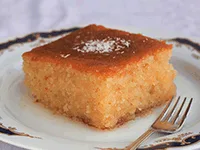
Ingredients:
- 6 eggs
- 12 tablespoons sugar
- 5 tablespoons flour
- 25 tablespoons semolina
- 1 kg sugar
- grated lemon zest
Method:
Beat the 6 eggs with 6 tablespoons of lukewarm water and 12 tablespoons of sugar. Then add 5 tablespoons of flour and stir it in with a spoon, then 25 tablespoons of semolina, again stirring with a spoon. You can add some grated lemon zest to the mixture for aroma. Bake in a preheated oven until it turns a nice golden yellow. Once it has cooled, cut it into diamonds.
Meanwhile, make a syrup from 1 kg of sugar and 800 ml of water. When the syrup is thick enough, set it aside to cool a little and, if you like, add the juice of half a lemon or some vanilla.
Then pour the syrup over the aravanija. The aravanija should be cold and the syrup slightly warm.
Sarma (Сарма)
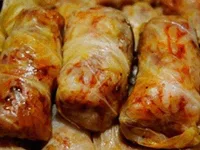
The best-known Macedonian national dish is SARMA. These days it appears on our tables more and more often, and depending on the occasion it's made for, it can be a festive dish, an appetizer or a main course.
Ingredients:
- 1 head of cabbage
- 500 g mixed minced meat
- 200 g bacon
- 100 g rice
- 1 onion
- parsley
- cooking oil
- salt, black pepper, Vegeta
Method:
Cut into the cabbage around the core (the hard part) and put it in a pot of boiling water to cook until it softens. Then lift it out with a slotted spoon and put it on a plate.
Put a pan with cooking oil on the stove to heat. Finely chop the onion and fry it in the pan. Then add the minced meat and stir. When the meat has browned a little, add the washed rice and stir again. Finally, add salt, black pepper and Vegeta and stir once more. Finely chop the parsley and add it to the pan. Then set the pan aside.
Take one of the softened cabbage leaves, put a little of the filling on it and roll up the sarma. Arrange the finished rolls in an ovenproof dish. Keep going until all the filling is used up. If you have any cabbage leaves left over, chop them up and lay them over the rolls. Lay the pieces of bacon over the rolls as well. Add a little water and bake the sarma at 175C for about 60 min. Before taking the sarma out, you can also make a light roux.
Note: this is a meat sarma, but you can also make a Lenten sarma by using ground and chopped walnuts instead of minced meat and, naturally, leaving out the bacon.
Serve with Macedonian red wine.
Bon appétit!
Veal pâté (Телешка паштета)
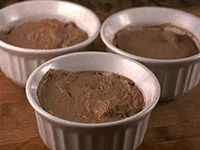
I'm sure our hard-working homemakers will like this recipe. It's quick to make and a very tasty appetizer (salad).
Ingredients:
- 1 kg veal
- 6 potatoes
- 6 carrots
- 3 onions
- 1 tablespoon “Dafinka” or “Vegeta” seasoning
- 1 tablespoon salt
- 250 ml mayonnaise
- a little black pepper
- mustard to taste
Method:
Wash and peel the ingredients listed and put them on to boil in a pot of water with the seasoning and salt. Cook until the meat is well done. Drain off the water, then put everything through a meat grinder. Add the mayonnaise (250 ml) to the ground mixture, though you can add more, depending on the personal taste of whoever is making this recipe. Add a little mustard and black pepper and mix the whole thing well. Serve in a deep dish, spread with mayonnaise.
Baklava (Баклава)
Ingredients:
- 500 g phyllo sheets
For the filling:
- 250 g margarine
- 180 g sugar
- 2 tablespoons semolina
- 3 eggs
- 300 g walnuts (half ground, half crushed)
- 100 g raisins
- 2 tablespoons rum
- grated zest of half a lemon
- half a tablespoon carob flour (optional)
- 1 packet vanilla sugar
- 150 g oil
For the syrup:
- 1 kg and 400 g sugar
- 900 ml water
- 1 packet vanilla sugar
Method:
Beat the eggs and sugar with a mixer until nicely thickened, then add the margarine and beat well again until smooth. Then, stirring all the while, add the semolina, the ground and crushed walnuts, the carob (if you manage to find it; otherwise it isn't essential), the grated lemon zest, the vanilla sugar and finally the raisins, soaked beforehand in the rum, and mix it all together well.
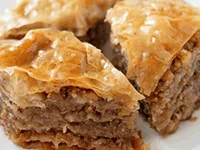
Lay the phyllo sheets in a greased pan (rectangular, the same size as the sheets) in this order: a sheet of phyllo, then sprinkle over a layer of oil. Keep alternating like this until you've used half the sheets, then add the filling (spreading it out nicely all over), and repeat the same steps with the rest of the sheets (a sheet of phyllo, then sprinkle over some oil) right to the end. The top must be sprinkled with oil again.
Cut the baklava lengthwise along the pan (into 3 equal strips), then crosswise (into 6 equal strips), which gives you squares. Then cut each square again in both directions (to get smaller squares), or once diagonally (if you want triangles). Put the cut baklava into an oven preheated to 240 degrees and bake until golden on top.
Meanwhile, prepare the syrup.
Put the sugar (1400 g) and 1 packet of vanilla sugar in 900 ml of water, and cook, stirring, until it starts to boil and thicken. Then let it boil just a little longer (about 4 min.) and take it off the heat to cool (until you can bear to hold your little finger in it for 10 seconds or so). Pour the syrup over the baklava and leave it overnight.
Enjoy, and bon appétit!
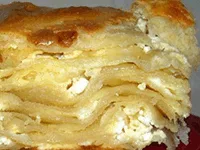
Gibanica (Гибаница) — layered phyllo pie
Ingredients:
- 250 g phyllo sheets
- 400 g minced meat (veal)
- 3 onions
- 1 tub of sour cream or yogurt (thick, sheep's-milk if possible)
- 2 eggs
- 1 tablespoon Vegeta
- oil
- black pepper
- salt
Method:
Heat 3-4 tablespoons of oil in a pan (enough for frying) and fry the finely chopped onion until lightly browned. Then add the minced meat, break it up with a fork and fry it. Once the meat is cooked, add 1 tablespoon of Vegeta and a little black pepper, mix it all together, then set it aside for about 5 minutes to cool a little.
Add 2 eggs and the sour cream or sheep's yogurt to the cooled meat and mix it all together until well blended.
Pour some oil into a small coffee cup and take a small coffee spoon. Ideally, use a rectangular pan the size of the phyllo sheets, but if you don't have one, a round one will do (as long as it isn't too small). Grease the pan with oil (thoroughly, all over), then lay down a sheet of phyllo and sprinkle it with oil from the spoon. Keep going like this, a sheet of phyllo and then a sprinkle of oil, until you've used half the sheets. Now spread the filling, that is, the meat you've prepared, over the sheets, then again a sheet, a sprinkle of oil over the sheet, and so on until all the sheets are in place. On the very top sheet, sprinkle more oil than on the ones before. Be careful to use no less than half a coffee cup of oil, but no more than a whole one, so the gibanica doesn't turn out too greasy. Put it all in an oven preheated to 240 degrees and bake until the top is browned.
Gibanica with cheese is made in a similar way.
Beat the eggs and add crumbled white cheese and sour cream or yogurt. Mix it all together well, then layer the sheets the same way as for the meat gibanica. Alternate a sheet of phyllo and a sprinkle of oil until half the sheets are used, then pour in the filling (the crumbled cheese), then carry on with the sheets and the oil until all the sheets are used up. Bake it the same way.
For anyone with a soft spot for gibanica with cheese and spinach, the method is identical, except that the spinach has to be washed well (leaf by leaf), then finely chopped and fried in a little oil. Just add the spinach to the same ingredients as for the cheese version, and everything else is the same.
Burek with meat (Бурек со месо)
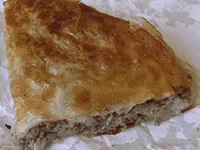
Ingredients:
- 1/2 kg ready-made phyllo sheets,
- 1/2 kg minced veal,
- 1 cup yogurt,
- 3 to 4 eggs,
- 1 cup oil,
- 1 onion,
- salt,
- 1 cup sparkling mineral water
Method:
Chop the onion and fry it in hot oil. Add the minced meat to the onion, salt it and mix well, but don't overcook it. In a greased baking pan, lay 3 to 4 sheets of phyllo, spread them with meat, and keep layering like that until you've used up all the sheets and filling. Cut the assembled burek into squares and pour the following topping over it: beat the eggs, add the yogurt, mineral water and oil, and mix it all together well. Soak the burek with the topping and let it stand for 10 to 15 minutes. Bake in a well-preheated oven.
Stuffed eggplant (Полнети модри патлиџани)
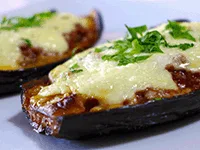
Ingredients:
- 10 eggplants
- 250 g sheep's cheese
- 6 eggs
- oil
- salt
- parsley
Method:
Wash the eggplants, cut off the stems and boil them until soft. Take the eggplants out of the hot water and pour cold water over them straight away. When the eggplants have cooled completely, cut them in half lengthwise and scoop out the seeds, leaving a shell of flesh against the skin. Take a pan, grease it with oil and arrange them side by side, hollow side up. Mash the cheese, add 6 egg yolks and finely chopped parsley, and season with salt. Beat 4 egg whites into stiff peaks, fold them into the cheese and fill the eggplants, putting a tablespoon of oil into each one. Put them in the oven and bake on low heat. Serve as an appetizer.
Time for sutlijash (Време за сутлијаш) — rice pudding
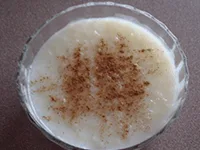
We bet it's been ages since you last made sutlijash, even though you've always loved it. Here's a recipe for anyone who has long forgotten how to make this once hugely popular dessert.
Ingredients:
- 1 cup (250 ml, level) rice
- 800 ml milk
- 200 ml water
- 100 g sugar (use more or less, as you like)
- ground cinnamon
Method:
Over low heat (stirring constantly so it doesn't burn), cook the milk, water and rice until the rice is done. Then add the sugar and keep cooking until it's as thick as you want it. It's best not to make the sutlijash too thick, because it keeps losing liquid afterwards and dries out.
Pour the cooked sutlijash into suitable dishes and leave it to cool. Sprinkle with ground cinnamon before serving.
It's very important, once you've tasted the sutlijash, to say:
Mmmmm...! Bravo to those Tugjino Jabano folks for this recipe!:)
Anyone fasting? Help yourself to some Ribji gjuvech! (Некој пости? Повелете на Рибји ѓувеч!) — fish and onion stew
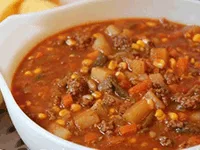
During fasting periods, alongside plenty of fruit and vegetables, Lenten cakes, egg-free pasta and lots of other things, we believe fish is often on the menu too.
Besides the usual, most common way of cooking fish (frying it in oil, after dredging the pieces in flour, of course), it would be nice now and then to make something a bit more elaborate, but also far tastier.
One such delicacy is ribji gjuvech.
Ingredients:
- 2 kg of any largish freshwater fish
- 1.5 kg onions (very finely chopped)
- 2 heads of garlic (one head finely chopped)
- 100 ml oil
- 100 g ground paprika (sweet)
- 50 g chopped peppers (hot)
- salt
- whole peppercorns (50-60 of them)
- bay leaf
- 1 bunch of chopped parsley
- 5 tablespoons ketchup
- 1 lemon
- 2 dl white wine
Method:
Clean the fish, wash it well and cut it into largish pieces. Then salt it, sprinkle it with the lemon juice and leave it to stand like that for an hour.
Meanwhile, fry the onion in the oil until it browns, then add enough water to cover it and, stirring now and then, wait for the onion to soften nicely. Then put the onion into a 5-litre pot with about 3 litres of water. Once the water boils, add the sweet ground paprika, one head of finely chopped garlic, one head of whole garlic cloves, salt, the peppercorns and the ketchup. After a few minutes (when the water starts to boil again), add the pieces of fish (head and all).
Now simmer the whole thing on low heat (it's important to keep it low, so the fish doesn't overcook), and every so often stir it by swirling the pot round and tilting it to all sides. After 15 minutes or so, add the chopped hot peppers and the bay leaf, then let it simmer for another 15 minutes or so.
You'll know the dish is ready when the onion has cooked down completely and you can hardly see it anymore. A few minutes before the end, add the white wine and the finely chopped parsley.
Yes! We know it looks like a big production: hard, fiddly, this, that and the other. But you'll remember the day you listened to us and made this dish.
We can't say whether 'for better' or 'for worse', but you'll remember it, that's for sure!
Pernichinja od juneshki shnicli (Перничиња од јунешки шницли) — stuffed beef schnitzel pockets
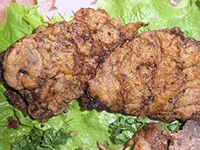
Once again we bring you a recipe for a very tasty dish. It's best made on the weekend, when there's usually a bit more time.
Ingredients:
- 500 g beef schnitzels
- 50 g bacon
- 150 g rice
- 100 ml sour cream
- 20 g flour
- 1 egg
- 8 tablespoons oil
- parsley
- one tablespoon all-purpose seasoning
- black pepper
Method:
Pound the beef schnitzels with a meat mallet. Fry some finely chopped bacon in oil, then add the half-cooked rice and season it with the all-purpose seasoning, black pepper and parsley. Spread the filling over the schnitzels, covering only one half of each (so the other half can be folded over). Close the schnitzels at the sides with toothpicks, dredge them in flour and fry them in oil. When the schnitzels are tender, pour the sour cream over them, and they're ready to serve.
You can choose the side dish yourselves, but we'd still recommend roast potatoes and pearl onions.
We also recommend making a Greek salad (from two tomatoes, one cucumber, half a red Buchim onion, one green pepper, two boiled eggs, 150 g of aged sheep's cheese, 15 olives, salt and olive oil).
And finally, we recommend that you start on the salad even before the meal, with a glass of mastika as an aperitif. That's right: not ouzo, but mastika. And we're guessing you don't know the difference between mastika and ouzo. Well, the difference is that mastika is made with natural anise, and ouzo with artificial anise.
Cheers!:)
Chicken casserole (Тава со пилешко месо)

There's one big danger if you serve this dish to guests. They'll tell everyone about you, and from then on you'll be up to your ears in guests!:) For this wonderful dish we'll use a combination of chicken legs and chicken breasts.
Ingredients:
- 1 kg chicken legs
- 1/2 kg chicken breasts
- 500 g sliced button mushrooms
- 1 onion
- 1/2 kg grated kashkaval cheese
- 400 ml sour cream
- 250 ml milk
- oil
- flour
- salt
- all-purpose seasoning
- parsley
Method:
We'll start by boiling the chicken, then taking the meat off the bones and cutting it into largish pieces. Finely chop the onion and fry it in hot oil together with the mushrooms. In an earthenware dish, first lay down 1/3 of the chicken, then 1/2 of the mushrooms, a little all-purpose seasoning and some parsley. Grate half the kashkaval over all of that and spread it with 150 ml of sour cream. Repeat the layers once more in the same order (1/3 of the meat, the rest of the mushrooms, seasoning, parsley, the rest of the kashkaval, 150 ml of sour cream). Then fry two tablespoons of flour in oil and add 250 ml of milk. Pour this mixture over the whole dish. The last layer is the remaining meat. Bake for about 40 minutes at 200 degrees Celsius. Once the dish is out of the oven, let it cool a little, then spread it with the rest of the sour cream.
Serve with a seasonal salad, and we'd also recommend a dry wine, any kind (white or red).
We know this looks like a rather complicated recipe, but that's only at first glance. It's actually simple to make.
Vegetarian moussaka (Вегетаријанска мусака)
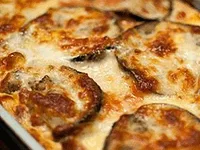
Tugjino Jabano has something to recommend to vegetarians, too. For them we have a dish that's a little unusual for a Macedonian kitchen, but very tasty all the same. It's worth making!
Ingredients:
- 750 g potatoes
- 1 onion
- 500 g button mushrooms
- 200 g sour cream
- 2 egg yolks
- oil
- salt
- seasoning mix (Zachinal, or Dafinka, or Vegeta, or anything similar)
- finely chopped parsley
Method:
Boil the potatoes in their skins, then peel them and slice them into rounds about 4 mm thick.
In hot oil, fry the finely chopped onion together with the sliced button mushrooms. When the mushrooms have softened, salt them and add the seasoning mix, the black pepper and the chopped parsley.
Then, in a greased ovenproof dish, put a layer of potatoes, then a layer of mushrooms, then keep alternating potatoes and mushrooms, finishing with a layer of potatoes. You can sprinkle each layer with a little oil if you like.
Separately, mix the egg yolks and the sour cream, pour this sauce over the moussaka, then bake it in the oven.
So vegetarians don't eat so badly after all!:)
Pita or pizza? (Пита или пица?) — pizza-flavoured phyllo rolls
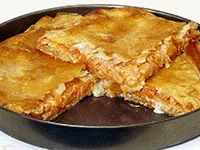
Picture this: one Saturday morning, a husband and wife start to quarrel. She wants pita for lunch that day, and he wants pizza. Is there a way out? Of course! The answer is Tugjino Jabano's recipe, called ‘Pizza-pita’.
Ingredients:
- 500 g phyllo sheets for pita
- 300 g finely chopped salami
- 200 g grated sheep's cheese (not too salty)
- 150 g sliced button mushrooms
- Ketchup
- Oregano
- Sesame seeds
Method:
Divide the phyllo sheets into two piles, to make two rolls.
Spread each sheet with a little ketchup, and on top of the ketchup put a little of the mixture of chopped salami, cheese, mushrooms and oregano you made earlier. When you've done the same with all the sheets, roll the whole lot up into a roll, spread the top with a very thin layer of ketchup, then sprinkle it with sesame seeds.
Do the same with the other half of the sheets.
Bake the rolls in a well-preheated oven and, when they're done, cut them into fairly thick rounds.
There you have it: we've headed off a fight, and we get to chow down on something tasty!
Friday is... Tavche gravche day! (Петок е... ден за Тавче гравче!) — Macedonian-style baked beans
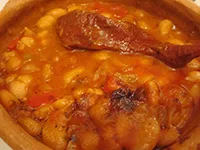
In honour of tradition and the cult following this dish enjoys among Macedonians as a nation, and in honour of all the people from Tetovo here in Canada, here's a recipe for the much-loved Tavche gravche.
Ingredients:
- Tetovo beans
- Onion
- Oil
- Flour
- Dried red peppers
- Salt
- Black pepper
- Mint
- Parsley
- Garlic (optional)
Method:
Wash the beans and cook them. Take care they don't go mushy (the beans should stay whole). Drain them (but not completely; a little water should be left), then add salt and a little finely chopped onion, lightly fried in plenty of oil with paprika stirred in.
Put the beans into a baking dish (earthenware is best), drizzle with a little oil, sprinkle over a little flour and some finely chopped parsley and mint, and lay a few dried red peppers on top. Add black pepper and, if you like, a few cloves of garlic.
Put the tavche in the oven to bake.
In summer you can lay a few slices of tomato and green pepper on top.
A few hours after the meal, when the gas starts to build up (as it typically does after eating legumes), ask yourself whether it makes any sense that beans were classed as 'cultivated plants'!!!
Boss, a ten with onions! (Мајсторе, десетка со кромид!) — grilled minced-meat kebabs
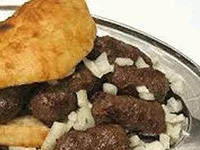
Almost every one of us has tried to make kjebapi at home that taste like the ones from Skopje's Old Bazaar, but hardly anyone ever pulls it off. So what's the secret? The seasoned grill masters say the biggest secret isn't in the spices (as many people assume), but in the choice of meat.
So here's a Tugjino Jabano recipe for good kjebapi, and we think it's worth trying to make them exactly like this:
Ingredients:
- 400 g beef (shoulder or neck only)
- 200 g mutton (shoulder only)
- 80 g green peppers
- 80 g garlic
- 12 g salt
- 2 g black pepper
- half a bunch of parsley
Method:
Wash the meat well, cut it into pieces (roughly 3x3 cm) and put it through a meat grinder. Work the minced meat with your hands for 15-20 minutes, gradually adding the seasonings. The mixture should then be left to rest for a few hours, after which you shape it into kjebapi.
Grill the kjebapi over charcoal (on a grill greased beforehand with bacon or oil) for 4-7 minutes; if you're using an electric grill, they'll take 10 minutes. While they're grilling, the kjebapi only need turning twice.
When they're done, they're best served straight away, with finely chopped onion and chili salt. For the gourmets who like it hot, it's nice to grill a few hot peppers on the side of the grill too.
And let's not forget to mention that kjebapi are best served not with bread, but with lepinja flatbreads (somuni).